Shavehead & Nogpop

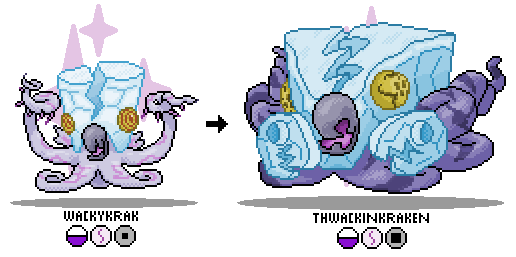
Shavehead & Nogpop

Designation: the SHAVED ICE, ICE POP, & MELTED cillimorphs

Group: COLONIAL

Native Biomes: PLANET BRRR & PLANET SCORCHER

Size: SMALL & MEDIUM

Interesting Facts: Shavehead and Nogpop exist in both freezing and arid environments, where they occupy extremely different forms, to the point of changing their state of matter. Curiously, when reduced to liquid in heat, their personality seems much dumber, sillier, and less of a stick in the frozen mud.

Previous Cillimorphs

Field Guide Intro

Next Cillimorphs

Mooca, Tipmooca, & Waymooca

Mooca, Tipmooca, & Waymooca

Designation: the MOON CALF, TIPPED COW, HOT AIR BALLOON, SEA COW, & MILKY WAY cillimorphs

Group: MAMMALISH

Native Biomes: PLANET SPLISHY & OUTER SPACE

Size: SMALL, MEDIUM, & LARGE

Interesting Facts: Mooca’s extreme buoyancy allows it to move as if in low gravity. Its maturation branches based on whether or not it is currently in space. If not, some of its new buoyancy chambers don’t fill, leaving it slothful and deflated, traveling via hot air udder instead of its legs, as if permanently tipped over. In space on the other hand, it becomes the massive Waymooca, swimming powerfully with its primary tail and secondary udder-tail.

Previous Cillimorphs

Field Guide Intro

Next Cillimorphs

Nipnidder & Lynquix

Nipnidder & Lynquix

Designation: the LYNX SPIDER cillimorphs

Group: SEGMENTED

Native Biomes: PLANET WOODZY & PLANET BRRR

Size: SMALL

Interesting Facts: A lot of hikers get clotheslined by Nipnidder’s extremely strong silk, adapted to stand up to its acrobatic shenanigans. When it matures its legs become equally strong, so much so that when it leaps it sounds like industrial springs… sproinging.

Previous Cillimorphs

Field Guide Intro

Next Cillimorphs

Spittyscorch & Hydrazaster

Spittyscorch & Hydrazaster

Designation: the ELEMENTAL HYDRA cillimorphs

Group: REPTOPHIBIAN

Native Biomes: PLANET BOLDERO & OUTER SPACE

Size: MEDIUM & LARGE

Interesting Facts: Each head produces an element vital to life and a balanced environment, so they use each other to provide what they need in deep caves and the vacuum of space. When a Hydrazaster gets angry it can produce every natural disaster at once.

Previous Cillimorphs

Field Guide Intro

Next Cillimorphs

Clask & Opearla

Clask & Opearla

Designation: the STRING OF PEARLS PLANT & DIVA cillimorphs

Group: GROWER

Native Biomes: PLANET SPLISHY & PLANET URBANIAK

Size: SMALL & MEDIUM

Interesting Facts: The juveniles seek out wind to help them flail and make pleasing click-clack noises. As adults they channel the vibrations of their many pearls through their throat into an incredible and strange singing voice. Their songs are continuous, as they do not need to breathe.

Previous Cillimorphs

Field Guide Intro

Next Cillimorphs

Foilinwirds & Ostiracy

Foilinwirds & Ostiracy

Designation: the TINFOIL HAT, CONSPIRACY BOARD, & OSTRICH cillimorphs

Group: BIRDISH

Native Biomes: PLANET SCORCHER & CYBERSPACE

Size: SMALL & MEDIUM

Interesting Facts: They’ve gone positively loopy from foraging on wild conspiracy theories online, babbling their own incoherent ideas incessantly and using their feathers to track imaginary connections on their corkboard sail. If you challenge their nonsense at all their head disappears into the sand in a microsecond.

Previous Cillimorphs

Field Guide Intro

Next Cillimorphs

Gubar & Gubyduck

Gubar & Gubyduck

Designation: the GOOSENECK BARNACLE, BARNACLE GOOSE, & GEODUCK cillimorphs

Group: SPINELESS

Native Biomes: PLANET SPLISHY & PLANET WOODZY

Size: SMALL

Interesting Facts: Gubar might look like it’s immobile, but it can wriggle anywhere and often hides among mushrooms on land, to lick them, and thus call dibs. Gubyduck’s superficial resemblance to waterfowl belies the hardness of its shell, which only winds up so cracked because they’re even clumsier than they are tough.

Previous Cillimorphs

Field Guide Intro

Next Cillimorphs

Darwish & Gillycrawl

Darwish & Gillycrawl

Designation: the DARWIN FISH cillimorphs

Group: FISHY

Native Biomes: PLANET BOLDERO & PLANET SCORCHER

Size: SMALL

Interesting Facts: These fishy morphs have adapted to land so well that they seem to exist only on the ‘landiest’ planets out of some kind of spite, popping up in deserts and on mountaintops to taunt nature with their blatant fins, gills, and glossy hides.

Previous Cillimorphs

Field Guide Intro

Next Cillimorphs