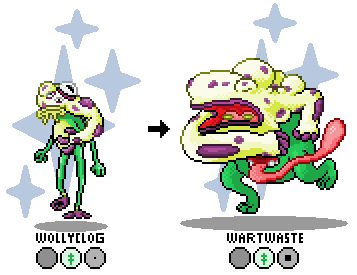
Mudaub & Marudder

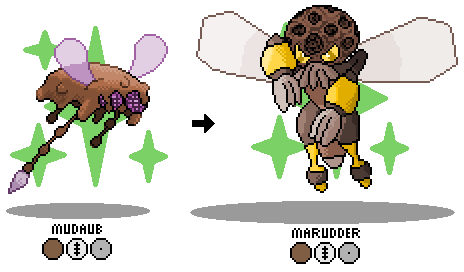
Mudaub & Marudder

Designation: the MUD WASP cillimorphs

Group: SEGMENTED

Native Biomes: PLANET BOLDERO

Size: SMALL

Interesting Facts: Mudaub is a drippy fella, but some of that drippage is actually a tail tipped with a stinger. They grub around in mud all day long, and when they mature into Marudder their obsession is taken into the next level, as they make a big mud truffle and wear it as a helmet, combed and shaped by their claw spades.

Previous Cillimorphs

Cillimorph Basics

Next Cillimorphs

Stiltooth & Devourator

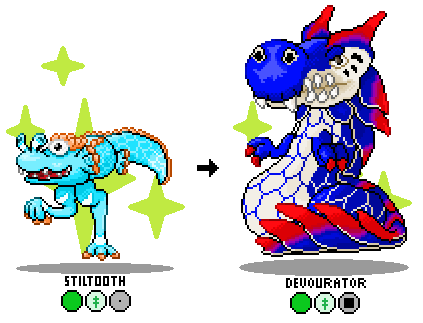
Stiltooth & Devourator

Designation: the CAIMAN & SARCOSUCHUS cillimorphs

Group: REPTOPHIBIAN

Native Biomes: PLANET WOODZY

Size: SMALL & LARGE

Interesting Facts: Sometimes when it looks like Stiltooth is swimming it’s actually stalking around in shallow water. When it balloons up into Devourator its long chicken legs stay the same size and become itty bitty dino arms. Don’t ask me where the third claw went, I have no idea, check Albuquerque (we totally don’t have Albuquerque anymore, not even like a space Albuquerque or a Neo Albuquerque).

Previous Cillimorphs

Cillimorph Basics

Next Cillimorphs

Tinch & Cacawctus

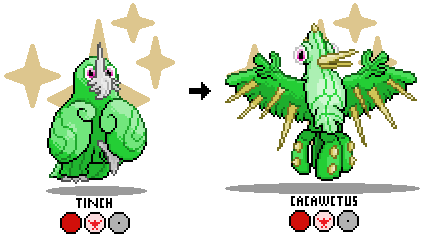
Tinch & Cacawctus

Designation: the CACTUS FINCH cillimorphs

Group: BIRDISH

Native Biomes: PLANET SCORCHER

Size: SMALL

Interesting Facts: Prickly cacti are the most inviting of perches for these lil’ flappers. Tinch’s thick leathery wings allow it to fly through dense patches of needles without harm. Cacawctus’s tail feathers have grown and reshaped into a cap that allows them to sit on top of a cactus and mimic its tip when resting.

Previous Cillimorphs

Cillimorph Basics

Next Cillimorphs

Flagellan & Criptide

Flagellan&Criptide

Flagellan & Criptide

Designation: the RED TIDE cillimorphs

Group: GROWER

Native Biomes: PLANET SPLISHY

Size: SMALL & LARGE

Interesting Facts: Flagellan propels itself through the water by spinning its corkscrew body. They totally ruin beach parties by congregating in the thousands, turning it into a real Flagellan fest. Worse, that’s when they tend to mature into Criptide, which generates a constant wave around its body and washes away any other partygoers who dared to stick around that long.

Previous Cillimorphs

Cillimorph Basics

Next Cillimorphs

Hallusion & Miracollage

Hallusion & Miracollage

Designation: the MIRAGE cillimorphs

Group: COLONIAL

Native Biomes: PLANET SCORCHER

Size: SMALL & LARGE

Interesting Facts: It’s unclear if these goobers even exist when there’s nobody parched in the desert to hallucinate them, but once there is they hang around like any other cillimorph. As such eggs containing Hallusion initially appear to be empty when they hatch. You can even walk through Miracollage like a park, and there’s no illusory dog droppings that somebody didn’t baggie.

Previous Cillimorphs

Cillimorph Basics

Next Cillimorphs

Thimbloon & Orbitweaver

Thimbloon & Orbitweaver

Designation: the BALLOONING SPIDER & SATELLITE cillimorphs

Group: SEGMENTED

Native Biomes: PLANET WOODZY, PLANET URBANIAK, & OUTER SPACE

Size: SMALL & MEDIUM

Interesting Facts: Thimbloon keeps spare silk-ball-balloons in its hollow body in case of rupture during its riding of wind currents. When it matures it ascends into low orbit, drawing most of its nourishment from all the spying it does on the little people going about their insignificant business.

Previous Cillimorphs

Cillimorph Basics

Next Cillimorphs

Herking & Dryherking

Herking & Dryherking

Designation: the TINNED TERRINE & SURSTRÖMMING cillimorphs

Group: FISHY

Native Biomes: PLANET BRRR

Size: SMALL

Interesting Facts: Herking jellies its excreted mucus into a puck, protecting against the cold and allowing them to greasily slide across the ice. They’re fishy, but they never swim since their fins are mostly encased in their guzz. Dryherking really pumps up the jam, replacing the mucus with various colorful stink fumes it swim-flies through. Nothing’s stinker than a Dryherking, but hey, don’t take my word for it, take your nose’s.

Previous Cillimorphs

Cillimorph Basics

Next Cillimorphs

Cavecub & Paleogrizz

Cavecub & Paleogrizz

Designation: the CAVE BEAR cillimorphs

Group: MAMMALISH

Native Biomes: PLANET BOLDERO

Size: SMALL & MEDIUM

Interesting Facts: Cavecub and Paleogrizz defend the caves in which they live very aggressively. Be careful when making cave paintings, because that wall might be the hibernating flank of a Paleogrizz, and if they like your drawings too much they might sit on you until you’ve covered their entire canvas.

Previous Cillimorphs

Cillimorph Basics

Next Cillimorphs

Slyhigh & Jormugonda

Slyhigh & Jormugonda

Designation: the WORLD SERPENT cillimorphs

Group: REPTOPHIBIAN

Native Biomes: PLANET WOODZY & OUTER SPACE

Size: LARGE

Interesting Facts: These massive cillimorphs use clinging clouds and wind currents to fly while in atmosphere. They glide along the edge of the sky to bask in sunrises. Entire weather systems play out across their skins. Jormugonda is the longest cillimorph in existence, and nobody ever sees the tip of its tail. It’s considered a bad idea to pull any loose thread, because it might be part of a Jormugonda.

Previous Cillimorphs

Cillimorph Basics

Next Cillimorphs

Swalun & Swaluminum

Swalun&Swaluminum

Swalun & Swaluminum

Designation: the ALUMINUM FOIL LEFTOVERS SWAN cillimorphs

Group: BIRDISH

Native Biomes: PLANET BRRR & PLANET URBANIAK

Size: SMALL

Interesting Facts: The silvery skin helps them insulate, trapping massive amounts of heat. They store food under the skin, which cooks it and helps the flavors mingle. Swaluminum tries to store too much and often bursts open, releasing a cartoonish scent trail that makes hungry cillimorphs chase it around.

Previous Cillimorphs

Cillimorph Basics

Next Cillimorphs