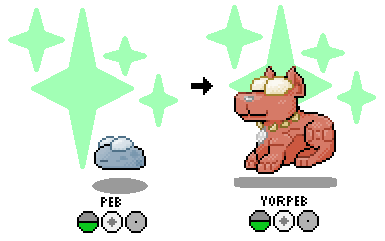
Peb & Yorpeb

Peb & Yorpeb

Designation: the PET ROCK & CANVAS cillimorphs

Group: COLONIAL

Native Biomes: PLANET WOODZY & PLANET URBANIAK

Size: SMALL

Interesting Facts: These goobers don’t generally move, to the point that some question whether they’re cillimorphs at all. It could be a variety of sculpted hoaxes perpetrated by dastardly geologists, who have long stewed over the injustice of zoology turning into the easier and more interesting cillimorphology while their own field stayed exactly the same.

Previous Cillimorphs

Field Guide Intro

Next Cillimorphs

Bleam & Lazoon

Bleam & Lazoon

Designation: the BLUE BIRD & LASER POINTER cillimorphs

Group: BIRDISH

Native Biomes: PLANET URBANIAK & CYBERSPACE

Size: SMALL

Interesting Facts: Bleam and Lazoon generate a light beam with their beaks that lets them highlight interesting objects in cyberspace, but its destructive potential is unlocked in the real world, where things can catch fire, which they seem blissfully unaware of. They’re much tamer company in dead zones, where they lack the wirelessly received energy needed for their little arsonist mouths.

Previous Cillimorphs

Field Guide Intro

Next Cillimorphs

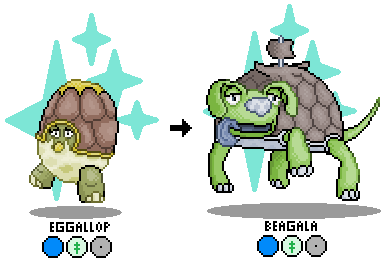
Eggallop & Beagala

Eggallop & Beagala

Designation: the EGG TOOTH & GALAPAGOS TORTOISE cillimorphs

Group: REPTOPHIBIAN

Native Biomes: PLANET SPLISHY

Size: SMALL

Interesting Facts: Eggallop stays upright with its low center of gravity, which makes enough sense, but when it becomes Beagala it can run just like a dog… except in slow motion. Its baffling to watch and irritates physicists to no end. It wags its tail and licks your face in slow motion too.

Previous Cillimorphs

Field Guide Intro

Next Cillimorphs

Onacall & Voyenger

Onacall&Voyenger

Onacall & Voyenger

Designation: the SETI SIGNAL & ASTRONAUT cillimorphs

Group: COLONIAL

Native Biomes: OUTER SPACE & CYBERSPACE

Size: SMALL

Interesting Facts: Onacall emanates endless signals densely packed with information about human civilization in the hopes of teaching aliens all about us, but they often lose focus, resulting in their silliness fields turning the signals into what they represent: a bunch of consumer garbage. When matured Voyenger has the presence of mind to collect this garbage and use it to build an environmental suit that helps it deliver messages to the most dangerous reaches of space and the worlds wide web alike.

Previous Cillimorphs

Field Guide Intro

Next Cillimorphs

Creepex & Idweb

Creepex & Idweb

Designation: the LURKER & DARK WEB cillimorphs

Group: SEGMENTED

Native Biomes: PLANET BOLDERO & CYBERSPACE

Size: SMALL

Interesting Facts: Creepex lurks in forums disguised as ellipses and icons, waiting to pounce on juicy gossip. Its appetites mature along with its body, so that the connoisseur Idweb instead shows off the various data packets and links it has stolen like a knockoff merchant in a dark alley. When the heat’s on for their creepy behavior they retreat to the remote darkness of Boldero caves.

Previous Cillimorphs

Field Guide Intro

Next Cillimorphs

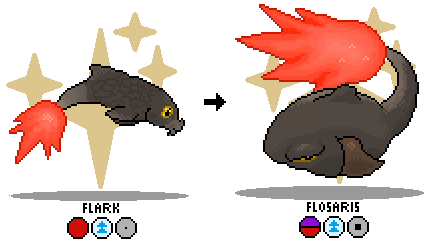
Flark & Flosaris

Flark&Flosaris

Flark & Flosaris

Designation: the RED-TAILED SHARK, FLARE, & SOLAR FLARE cillimorphs

Group: FISHY

Native Biomes: PLANET SCORCHER & OUTER SPACE

Size: SMALL & MEDIUM

Interesting Facts: Flark lives in sparse desert waterways, waiting for the cool of night so it can launch into the air and ignite its tail. Because of its dark coloration, it just looks like a signal flare. It’s trying to break through the atmosphere, and once it succeeds it will mature into Flosaris, which similarly looks like nothing more than a solar flare against the endless darkness.

Previous Cillimorphs

Field Guide Intro

Next Cillimorphs

Azp & Azzets

Azp & Azzets

Designation: the SNAKE GAME & FROZEN ASSETS cillimorphs

Group: REPTOPHIBIAN

Native Biomes: PLANET BRRR & CYBERSPACE

Size: SMALL

Interesting Facts: Azp stores valuable data and food inside eggshells, and then inside ice cubes for another layer of protection. As Azzets it invests so smartly that it can amass a big stockpile of eggs it likes to rest on in the shape of a dollar sign, you know, to brag.

Previous Cillimorphs

Field Guide Intro

Next Cillimorphs

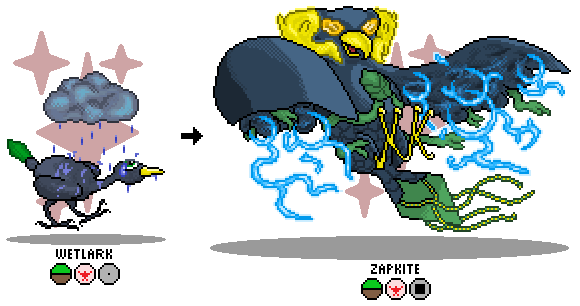
Wetlark & Zapkite

Wetlark & Zapkite

Designation: the PERSONAL RAIN CLOUD & THUNDERBIRD cillimorphs

Group: BIRDISH

Native Biomes: PLANET BOLDERO & PLANET WOODZY

Size: SMALL & LARGE

Interesting Facts: Wetlark is always getting rained on thanks to the cloud following it, which ensures fresh drinking water, but it doesn’t seem happy about it. When it matures the cloud is integrated into its down, giving it incredible control of storm forces. Its mountainous territories can overlap with Clusterukh, resulting in extreme bird-with-a-gem-on-its-chest on bird-with-a-gem-on-its-chest rivalries.

Previous Cillimorphs

Field Guide Intro

Next Cillimorphs

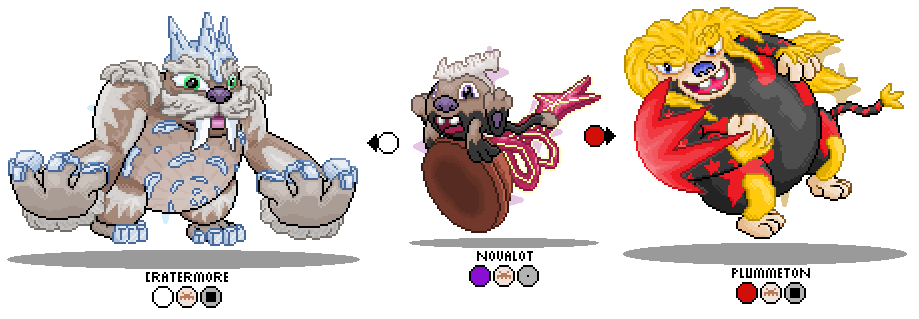
Novalot, Cratermore, & Plummeton

Novalot, Cratermore, & Plummeton

Designation: the PSEUDOLEGENDARY, LEGENDARY CRATER, & LEGENDARY METEOR cillimorphs

Group: MAMMALISH

Native Biomes: OUTER SPACE, PLANET BRRR, & PLANET SCORCHER

Size: SMALL & LARGE

Interesting Facts: Novalot generates and plays with miniature stars the way otters used to with clams and rocks. When it’s ready to mature it descend to one of two planets. If it’s planet Brrr, it matures at the moment of impact, integrating the crater into its body to become stoic Cratermore. If it’s planet Scorcher, the higher heat of reentry causes it to mature midair into the flashy Plummeton.

Previous Cillimorphs

Field Guide Intro

Next Cillimorphs

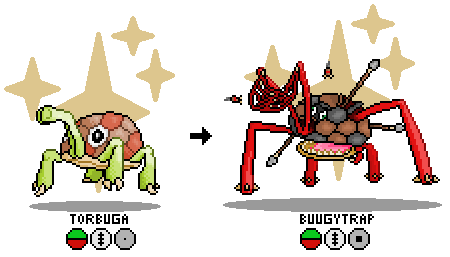
Torbuga & Buugytrap

Torbuga&Buugytrap

Torbuga & Buugytrap

Designation: the TORTOISE BEETLE & BOOBY TRAP cillimorphs

Group: SEGMENTED

Native Biomes: PLANET SCORCHER & PLANET WOODZY

Size: SMALL & MEDIUM

Interesting Facts: Torbuga’s united antennae help it seek out hidden pockets of food and water, allowing its eyes to stare off into space and never focus on anything. Buugytrap is much more reactive, lying in wait until something surprises it and triggers all the internal traps that come out of its hinged scales, like tranquilizer darts, nets, spears, and even the spike pit mouth it drops from underneath.

Previous Cillimorphs

Field Guide Intro

Next Cillimorphs