Duqoya & Navigoss

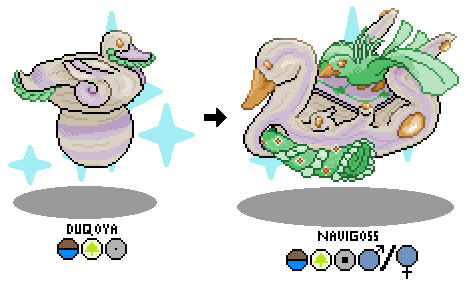
Duqoya & Navigoss

Designation: the DUCK DECOY & HELIPAD cillimorphs

Group: GROWER

Native Biomes: PLANET BOLDERO & PLANET SPLISHY

Size: SMALL & MEDIUM

Interesting Facts: Buoyed by a hollow sphere of wood, Duqoya hangs out with waterfowlish morphs despite its awkward silence. Maturing into Navigoss splits it into two parts: a home base female and a flying male adapted to maximize reproductive opportunities.

Previous Cillimorphs

Field Guide Intro

Next Cillimorphs

Touchadile & Voxelsox

Touchadile&Voxelsox

Touchadile & Voxelsox

Designation: the BOX TURTLE & VOXEL cillimorphs

Group: REPTOPHIBIAN

Native Biomes: CYBERSPACE & OUTER SPACE

Size: SMALL

Interesting Facts: Touchadile can watch six different signals on its interior screens, which others can watch from the outside. Sometimes its head stays locked away for years at a time, rarely even changing the channel. Voxelsox can disassemble its shell into cubes that can be endlessly rearranged.

Previous Cillimorphs

Field Guide Intro

Next Cillimorphs

Silcraft & Lunafroth

Silcraft & Lunafroth

Designation: the CORACLE & LUNAR MOTH cillimorphs

Group: SEGMENTED

Native Biomes: PLANET SPLISHY & OUTER SPACE

Size: SMALL

Interesting Facts: Silcraft weaves its own coracle and paddle to traverse great expanses, rarely looking away from various moons. As an imago its both its wing shape and the power of its gravity-altering tidal wing beats are affected by the phases of its favorite moon.

Previous Cillimorphs

Field Guide Intro

Next Cillimorphs

Boggold & Gobyscope

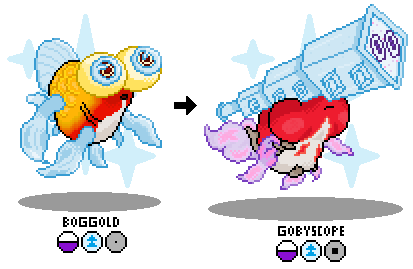
Boggold & Gobyscope

Designation: the BUBBLE-EYE GOLDFISH & WATER TELESCOPE cillimorphs

Group: FISHY

Native Biomes: PLANET BRRR & OUTER SPACE

Size: SMALL & MEDIUM

Interesting Facts: Boggold’s big eyes are further enhanced by a pair of icy contact lenses, giving it the power to look out from the waters of Brrr to see if it wants to go anywhere in particular in space, or vice versa. Gobyscope’s lenses are upgraded to an ice telescope with a water lens that can see outside the system, but it’s so heavy that it often lists to one side and sends the morph rolling.

Previous Cillimorphs

Field Guide Intro

Next Cillimorphs

Lammerbrat, Norgeier, & Valgeier

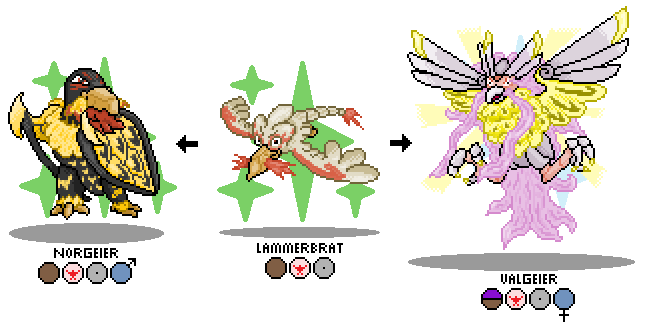
Lammerbrat, Norgeier, & Valgeier

Designation: the LAMMERGEIER, VIKING, & VALKYRIE cillimorphs

Group: BIRDISH

Native Biomes: PLANET BOLDERO & OUTER SPACE

Size: SMALL

Interesting Facts: The adults have complementary roles in their sexual dimorphism, with Norgeier shaping their wings and feathers into axes and shields for territorial battles. When they get too tired, a Valgeier descends from space and whisks them away to a place of recovery.

Previous Cillimorphs

Field Guide Intro

Next Cillimorphs

Boneclubba & Bonecutta

Boneclubba & Bonecutta

Designation: the CUTTLE BONE cillimorphs

Group: Spineless

Native Biomes: PLANET SCORCHER & OUTER SPACE

Size: SMALL & MEDIUM

Interesting Facts: Boneclubba’s bony shell allows it to go inert outside of water and in extreme temperatures for long periods. Bonecuttas figure out how to convert it into reaping blades, but don’t have much to cut in space or the desert, so sometimes they’re seen chasing around frightened grower morphs trying to give them a haircut.

Previous Cillimorphs

Field Guide Intro

Next Cillimorphs

Shuga & Funnycomb

Shuga & Funnycomb

Designation: the WILD HONEYCOMB cillimorphs

Group: COLONIAL

Native Biomes: PLANET WOODZY

Size: SMALL

Interesting Facts: Shuga gathers honey and stores it in hexagonal cells it can detach and leave as gifts, or as insults if it was a bad batch. Funnycomb tries to gather as many different wild honeys as possible, trekking endlessly form hive to hive in search of new shades and flavors.

Previous Cillimorphs

Field Guide Intro

Next Cillimorphs

Beenbag & Grunestalk

Beenbag & Grunestalk

Designation: the MAGIC BEANS & GIANT BEANSTALK cillimorphs

Group: GROWER

Native Biomes: PLANET SPLISHY & PLANET BOLDERO

Size: SMALL & LARGE

Interesting Facts: Beenbag forages for whimsical residue of silliness fields, cultivating them inside its bag until they ferment to a cloud-like consistency. Grunestalk hides its incredible height inside these gathered materials, creating an endless portal between floating clouds.

Previous Cillimorphs

Field Guide Intro

Next Cillimorphs

Glowl & Ireharp

Glowl & Ireharp

Designation: the EAGLE OWL cillimorphs

Group: BIRDISH

Native Biomes: PLANET BOLDERO

Size: SMALL & MEDIUM

Interesting Facts: It’s long been a myth that these morphs are supposed to be nocturnal, but they come out during the day anyway just to glare at you. Ireharp’s crest feathers allow it to fly effectively even with its head turned all the way around.

Previous Cillimorphs

Field Guide Intro

Next Cillimorphs

Herrdunnit & Redhended

Herrdunnit & Redhended

Designation: the RED HERRING cillimorphs

Group: FISHY

Native Biomes: CYBERSPACE

Size: SMALL & MEDIUM

Interesting Facts: Shifty and definitely up to something, except that they never are. It’s those dastardly dark web shadows always following them around who are the true culprits of any nearby schemes. Symbiotic cryptomorphs? Animated digital footprints? Who knows, but they do seem to vanish in dead zones, leaving their accompanying patsies high and dry.

Previous Cillimorphs

Field Guide Intro

Next Cillimorphs